Wooden Keyboard Case
Category:
Woodworking
CNC
Electronic
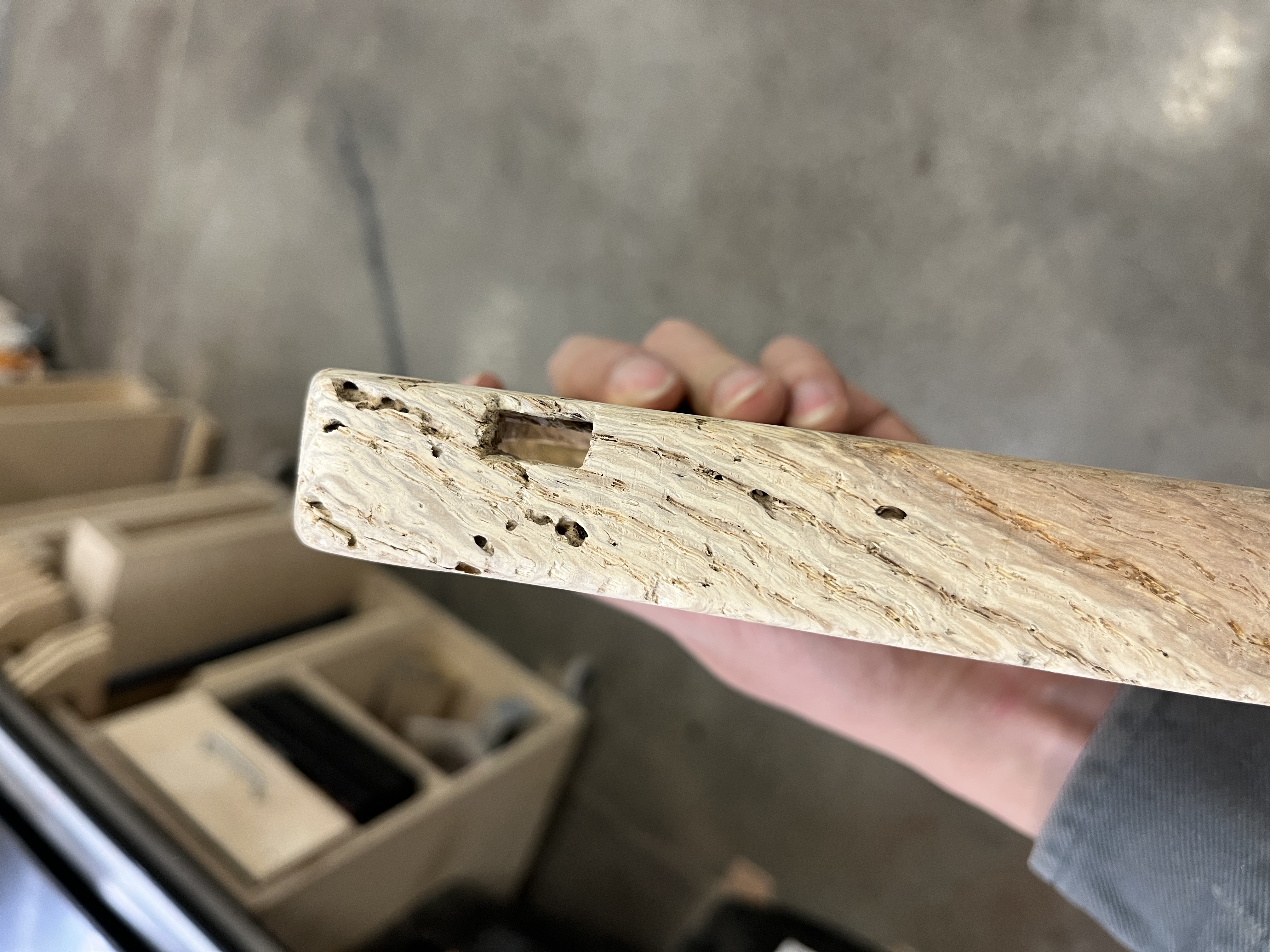
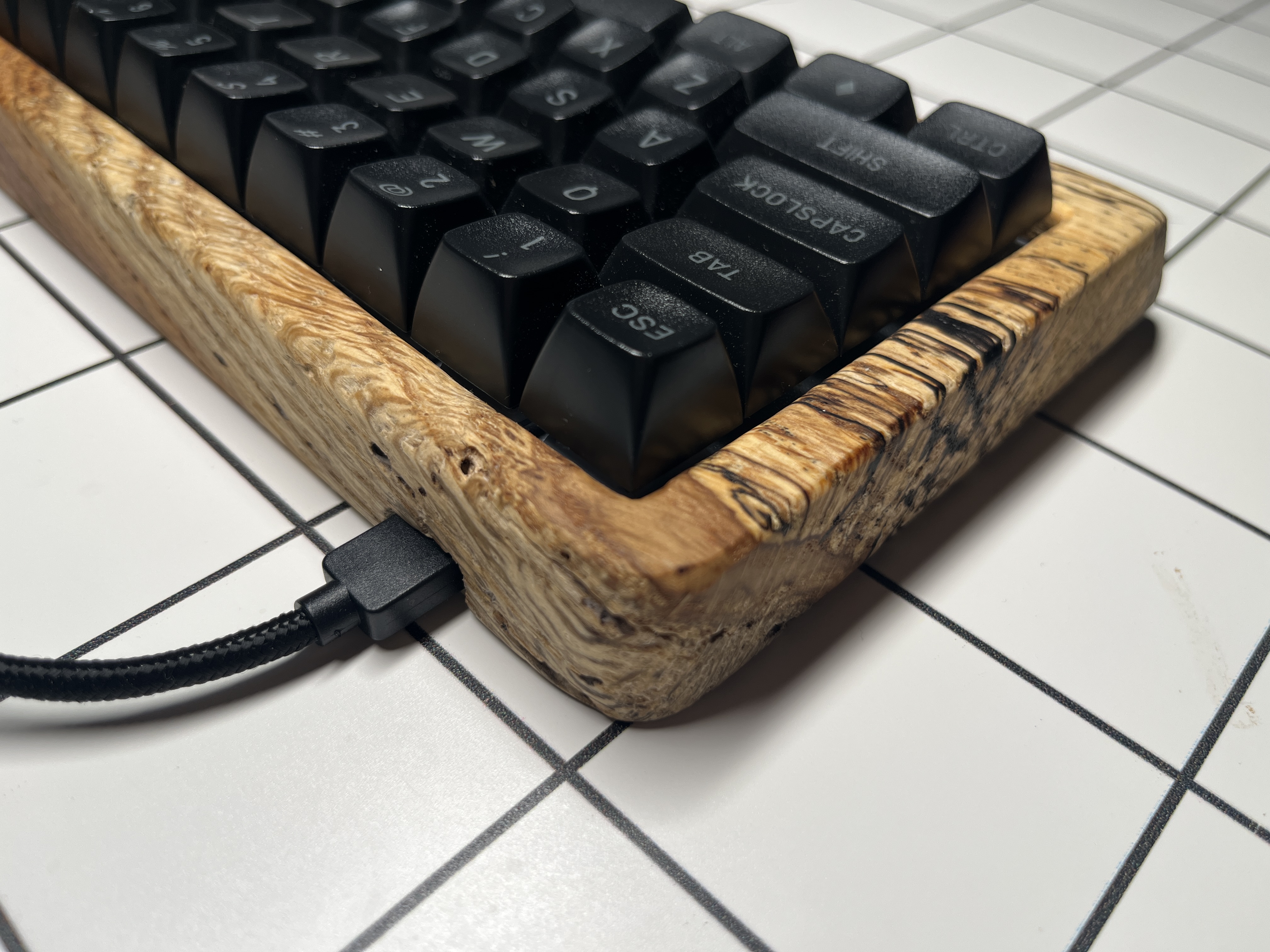
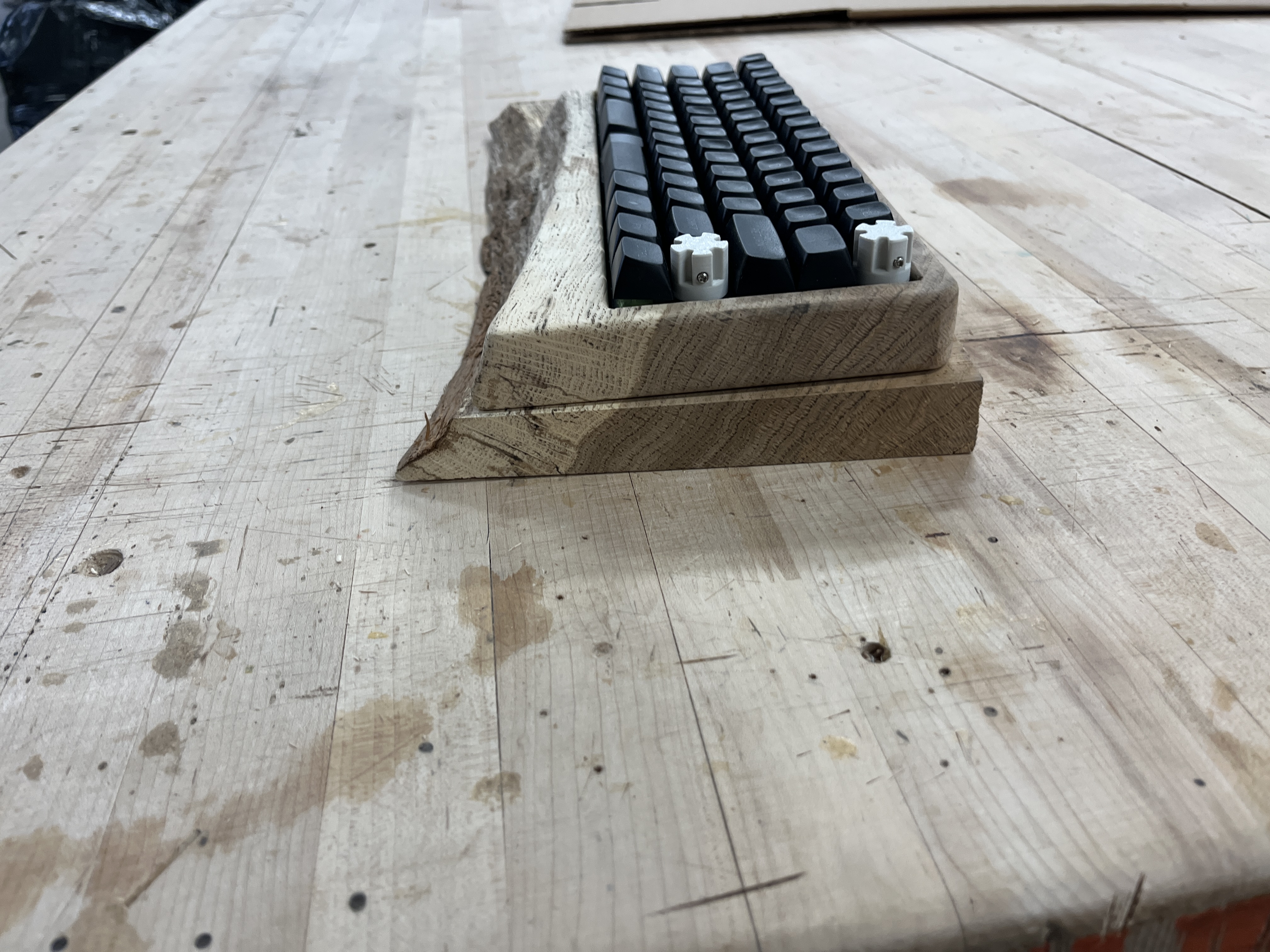
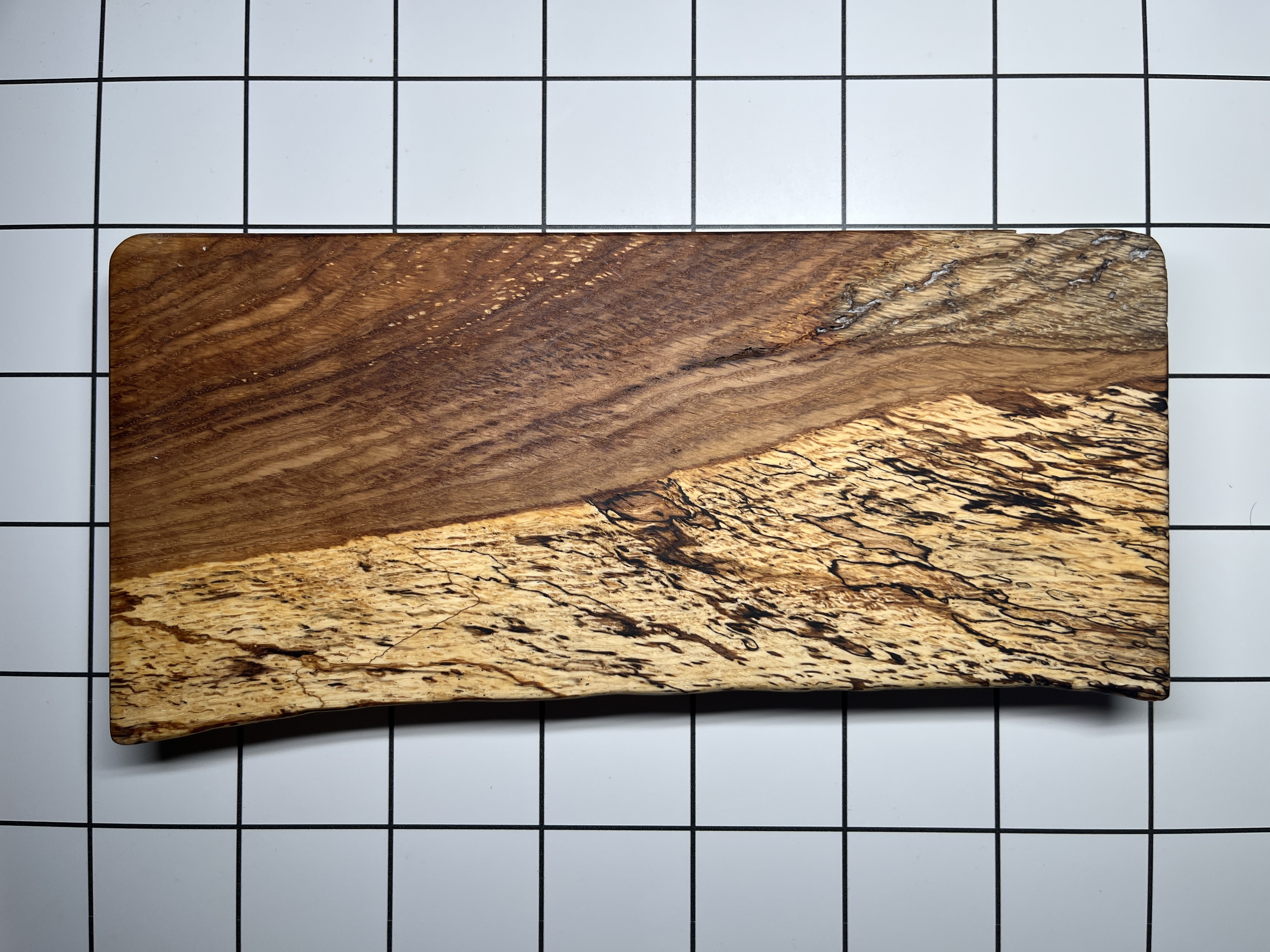
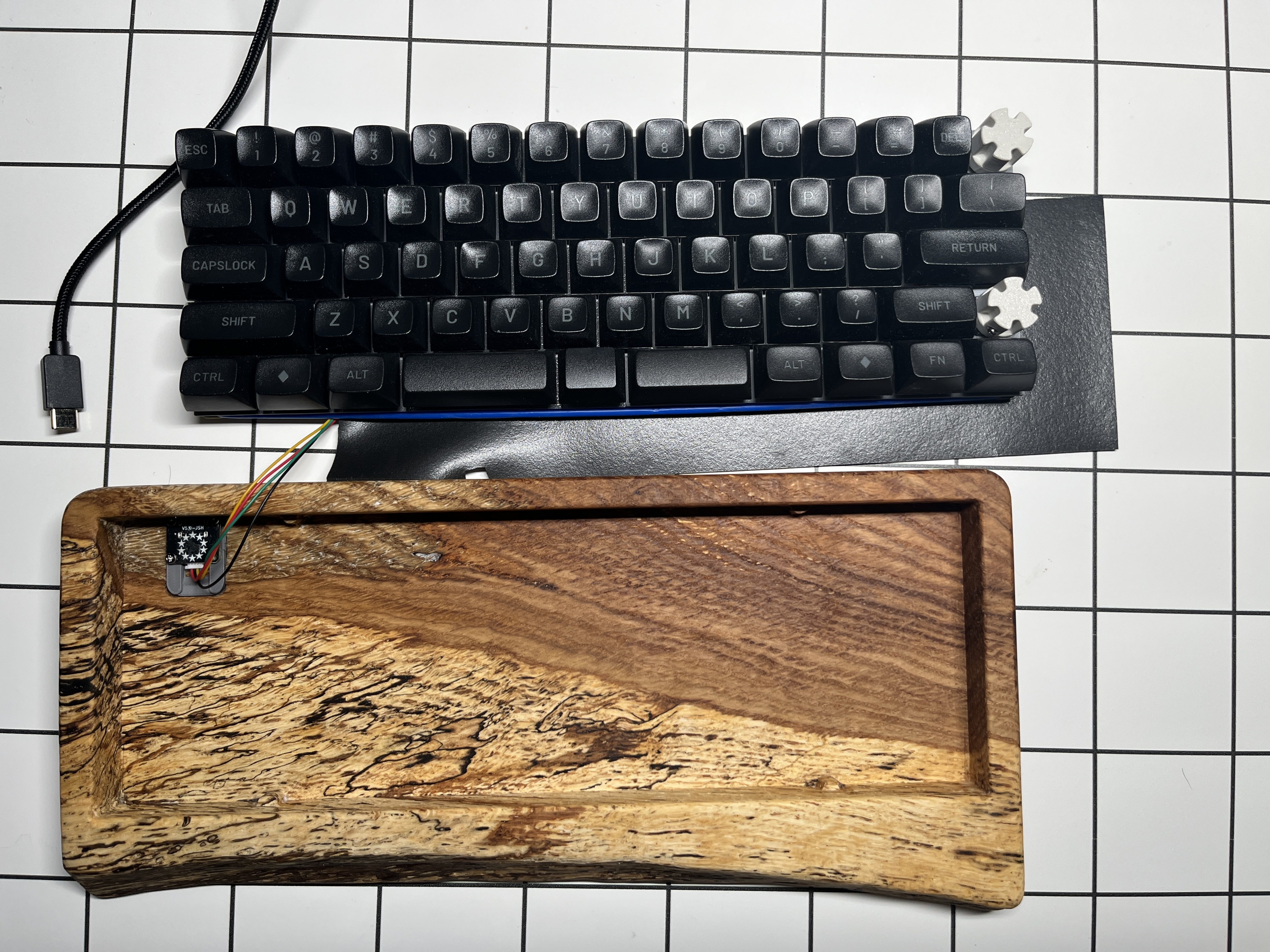
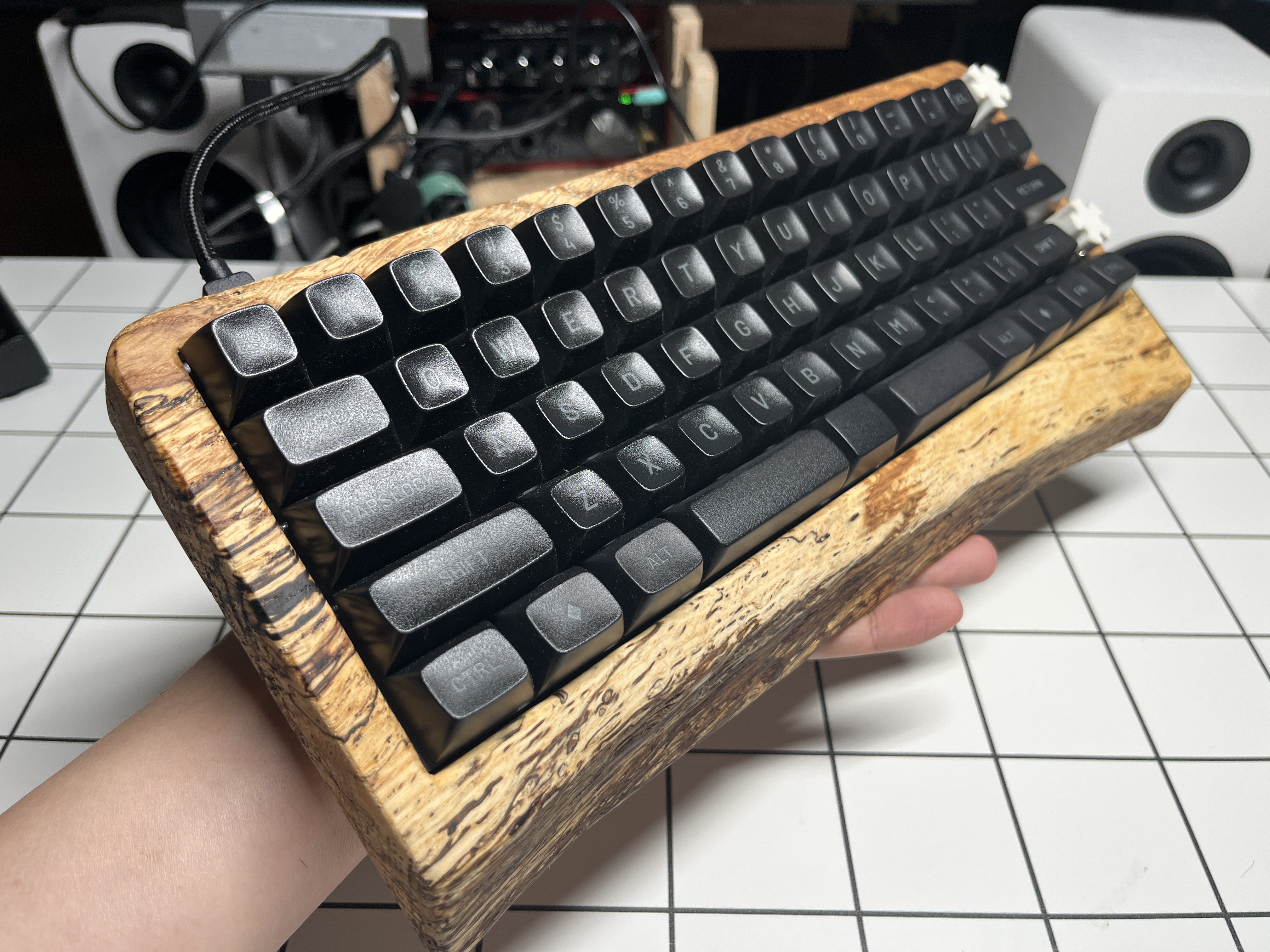
Made from a piece of Oka from the scrap bin, this case holds a normal-sized 60% keyboard component. The fabrication process preserves the original live edge on the wood, blending the edge between rigid, manufactured parts and the organic grain created by nature.
![]()
![]()
![]()
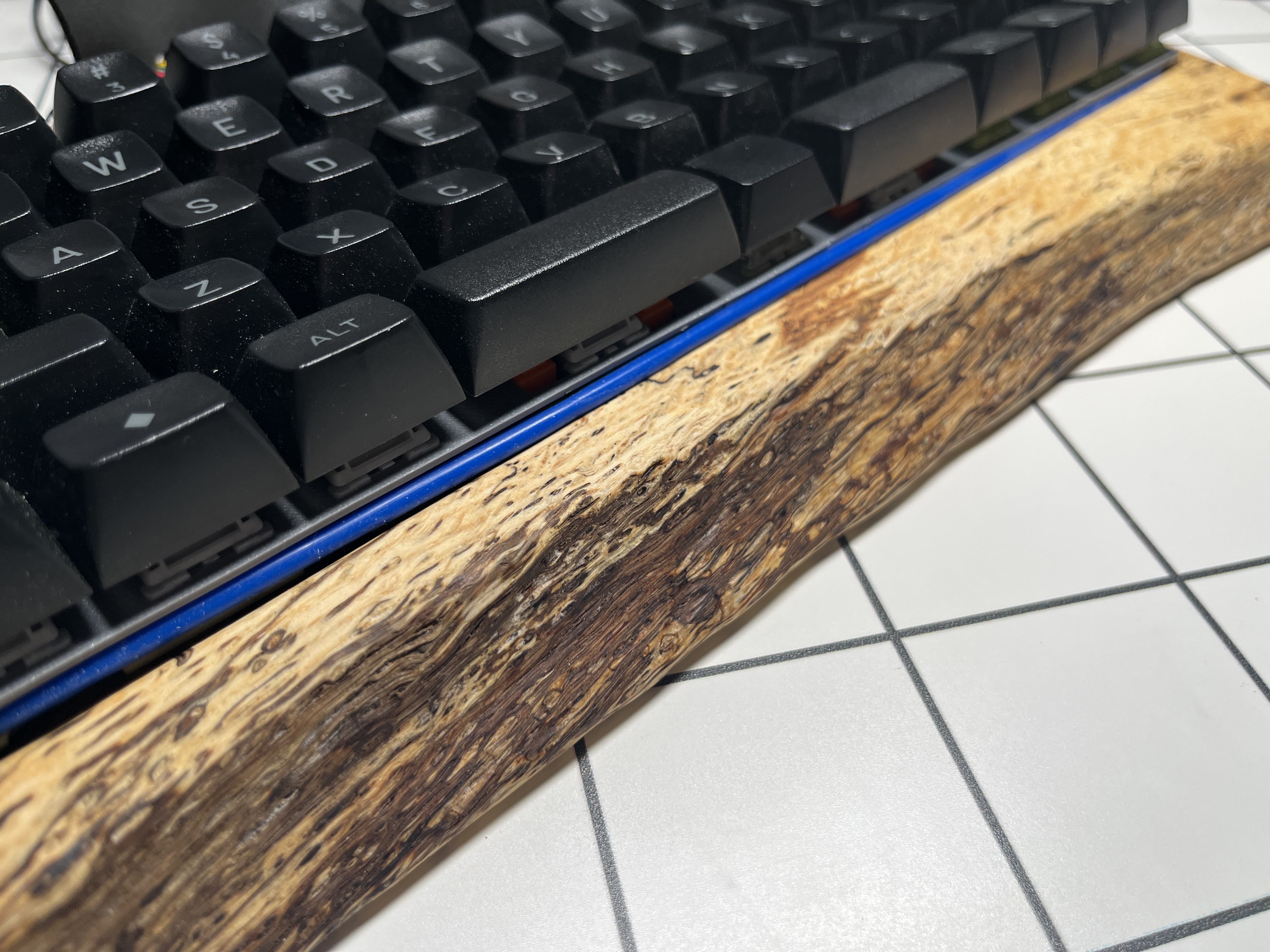
Based on the characteristics of the wood, my design evolved into a bulkier look to preserve the original material, while also maintaining the structure's stability. The case features an O-ring-mounted mechanism, which has been proven by the keyboard community to be a cost-effective and component-friendly choice.
![]()
![]()
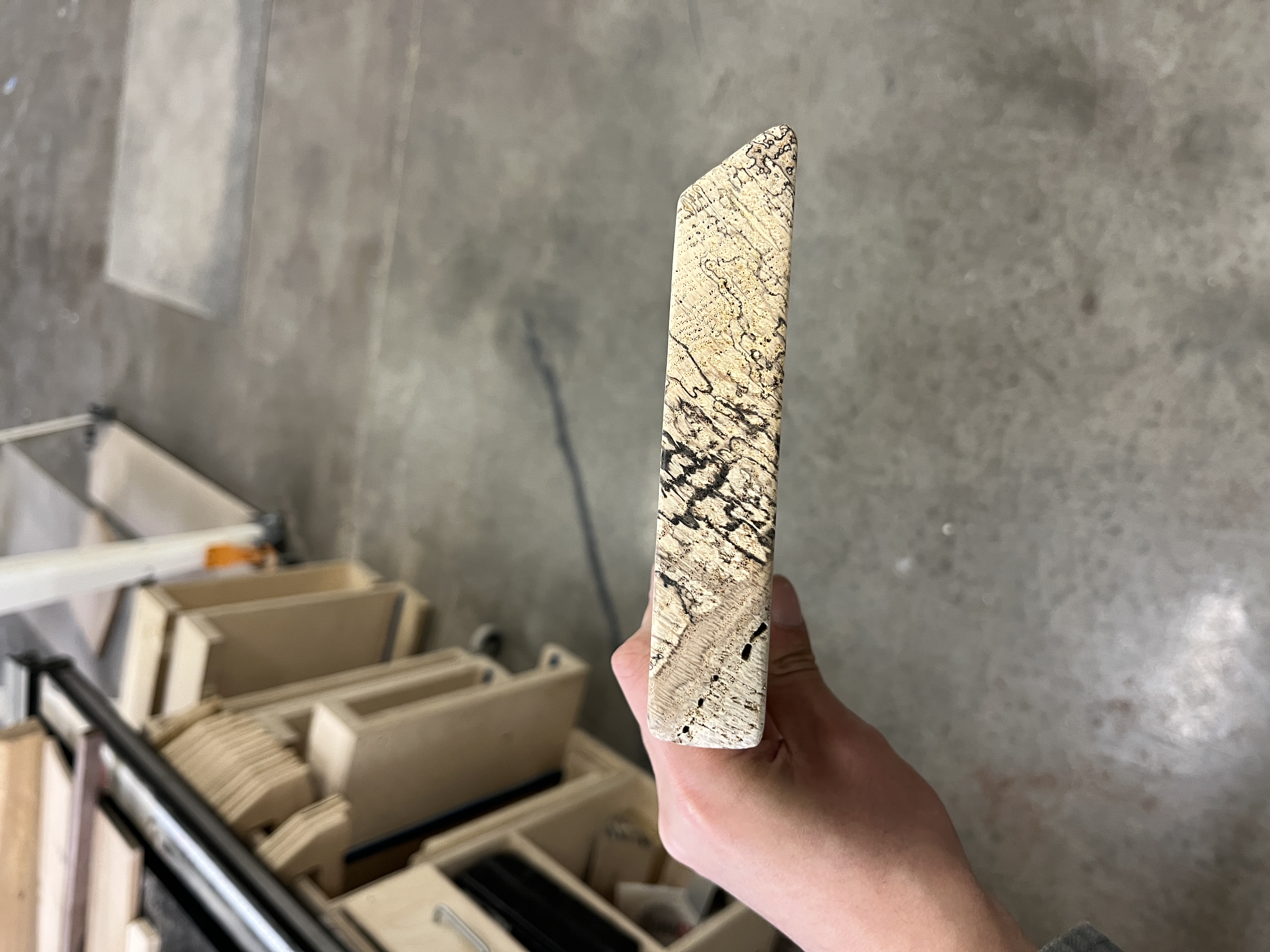
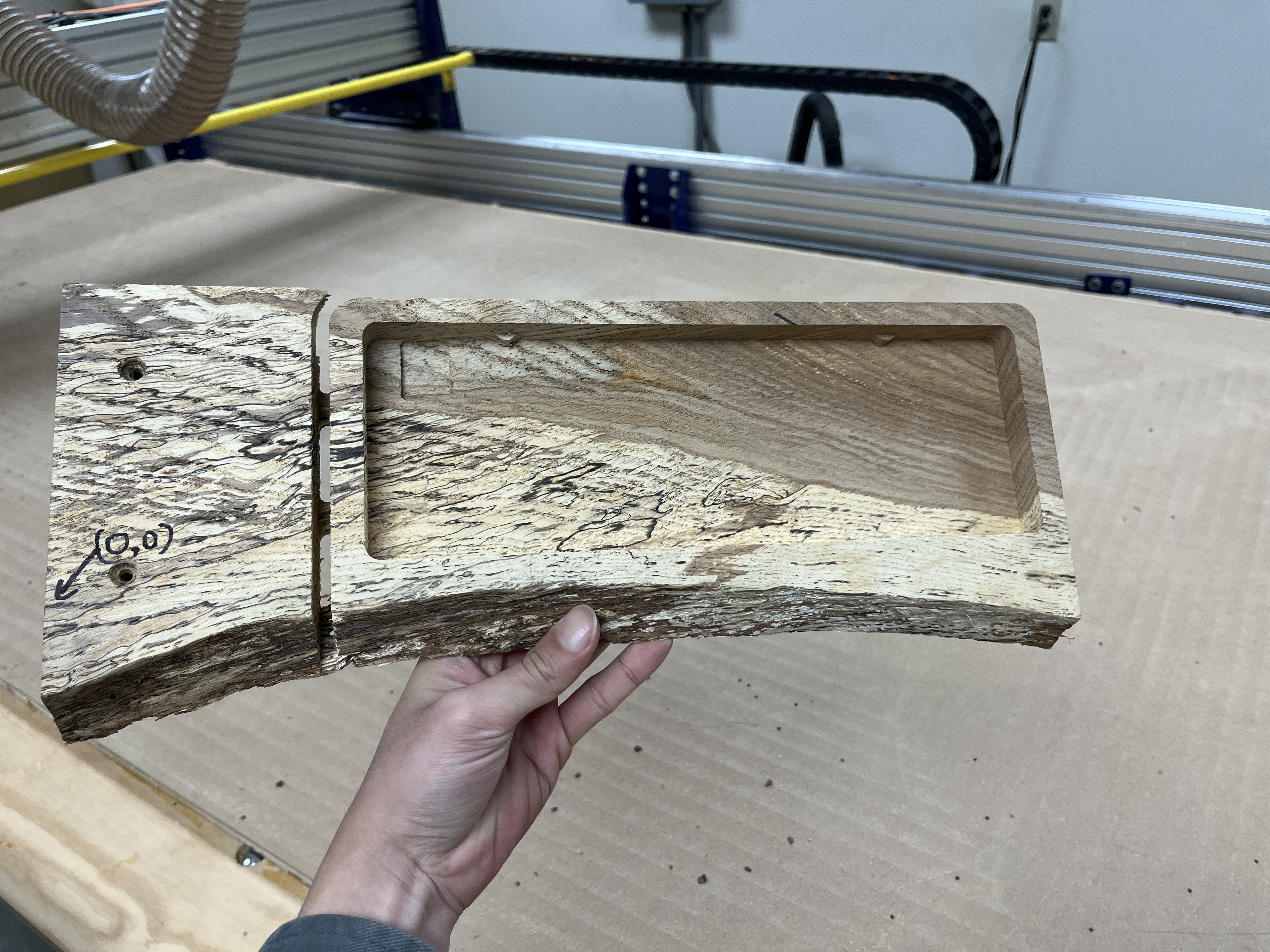
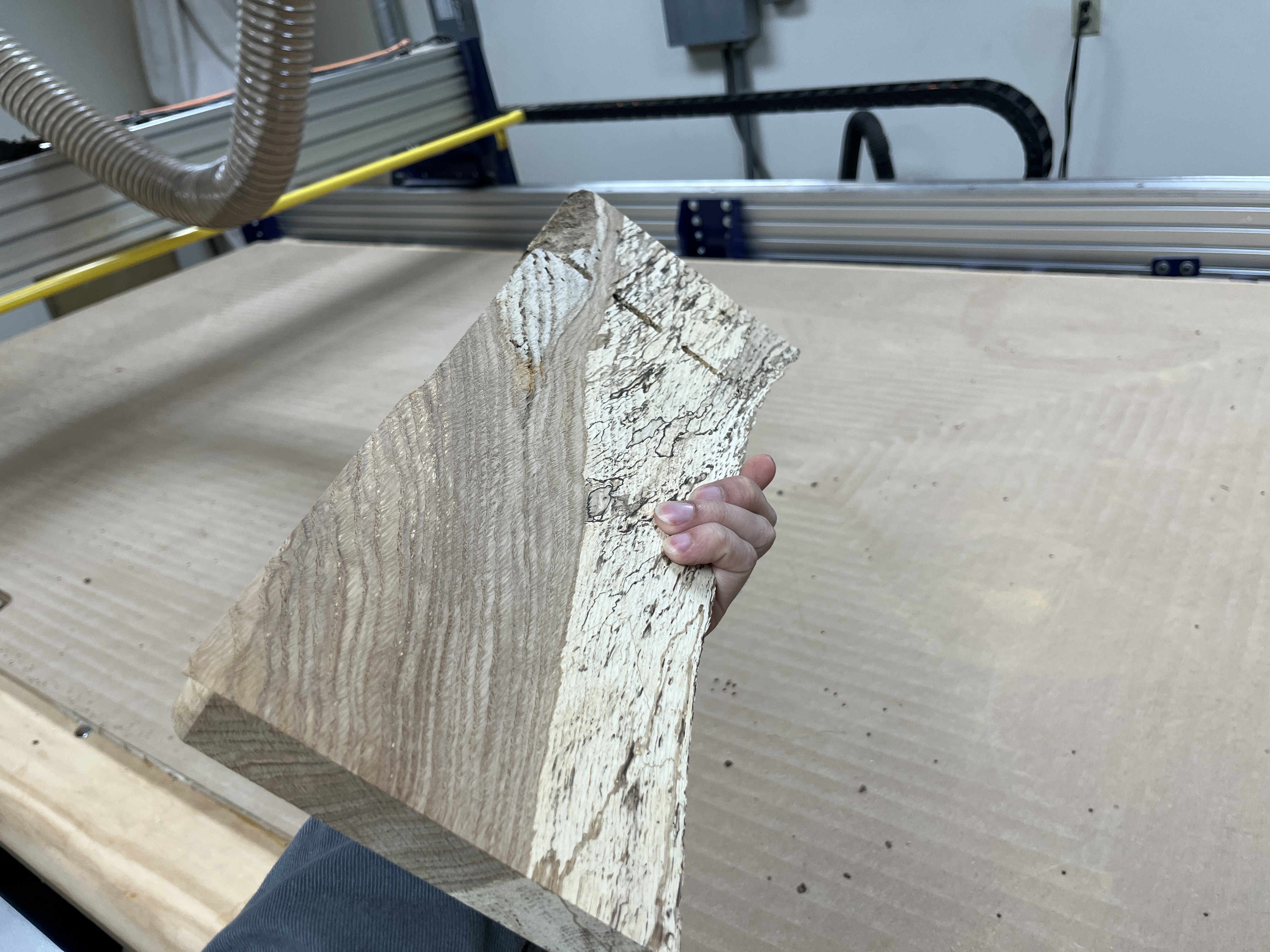
The material was found in the scrap bin. It has holes and cracks, making it hard to withstand larger projects. I was drawn by the beautiful live edge and decided to turn it into a CNC project. After measuring and inspecting the cracks and holes, I found 60% keyboard components are a good fit for this piece of material.
![]()
![]()
![]()
![]()
![]()
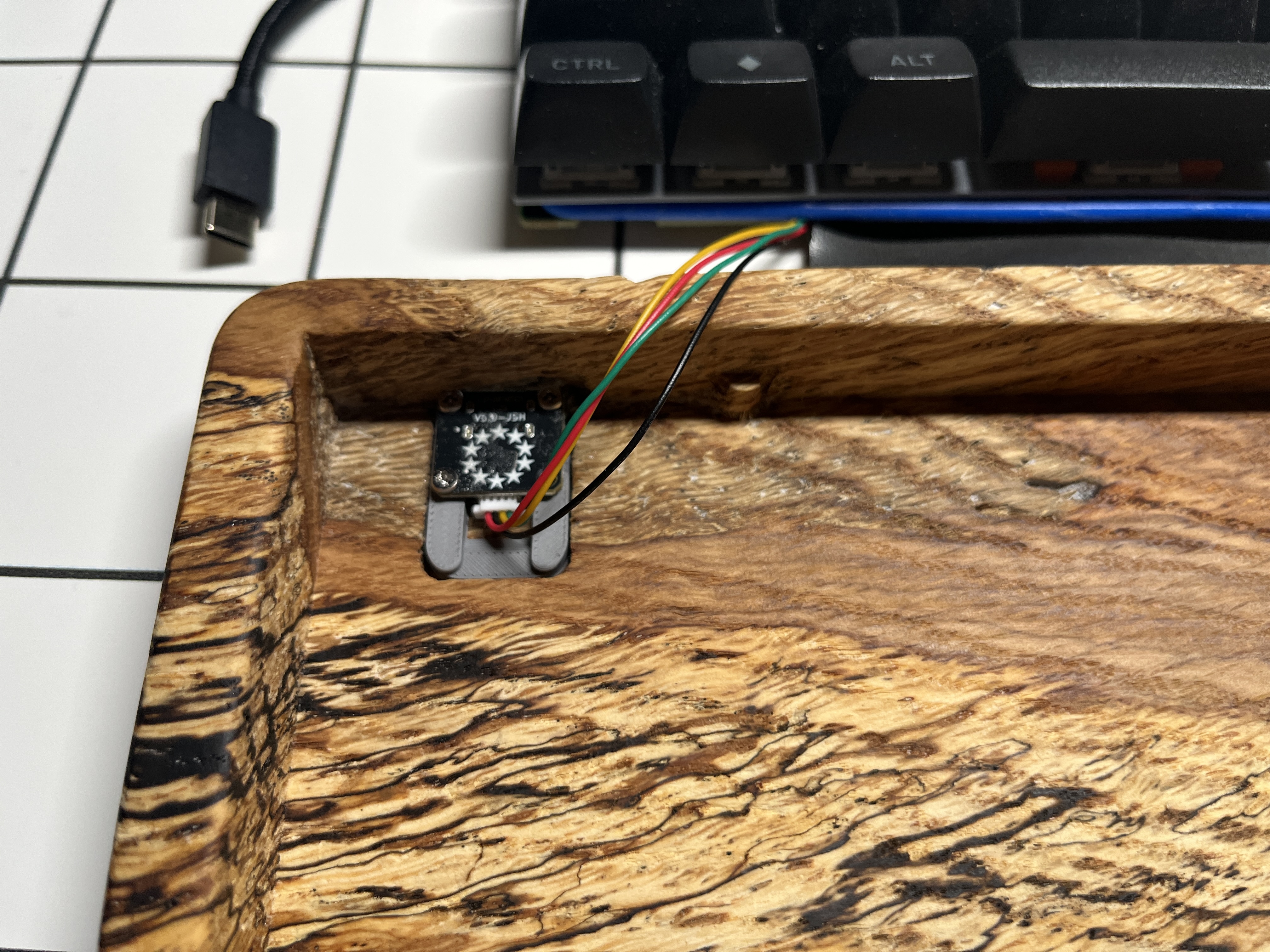
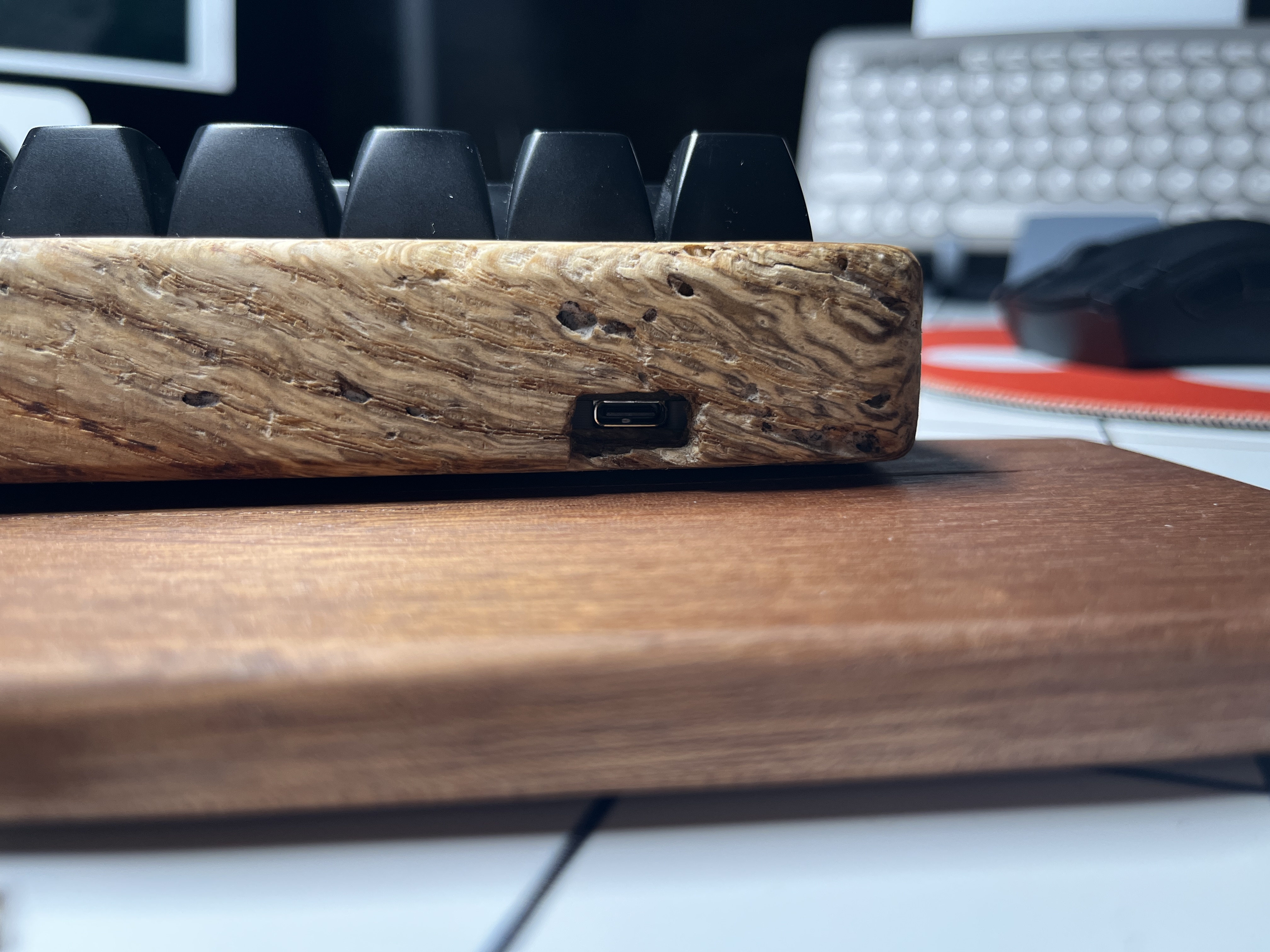
I designed the case with Fusion 360, tested the tolerance with 3D printing, and created the CNC program in Vectric Aspire. Finally, I used the router and orbital sander to create the rounded corner, removed the bark, and carved the USB Port with a chisel. I also designed a 3D printed adapter to hold the USB port, so I do not need to drill holes in the wood that will loosen over time.
The piece was finished with 400-grit sanding and 3 layers of oil.
![]()
![]()
![]()
![]()
![]()
![]()
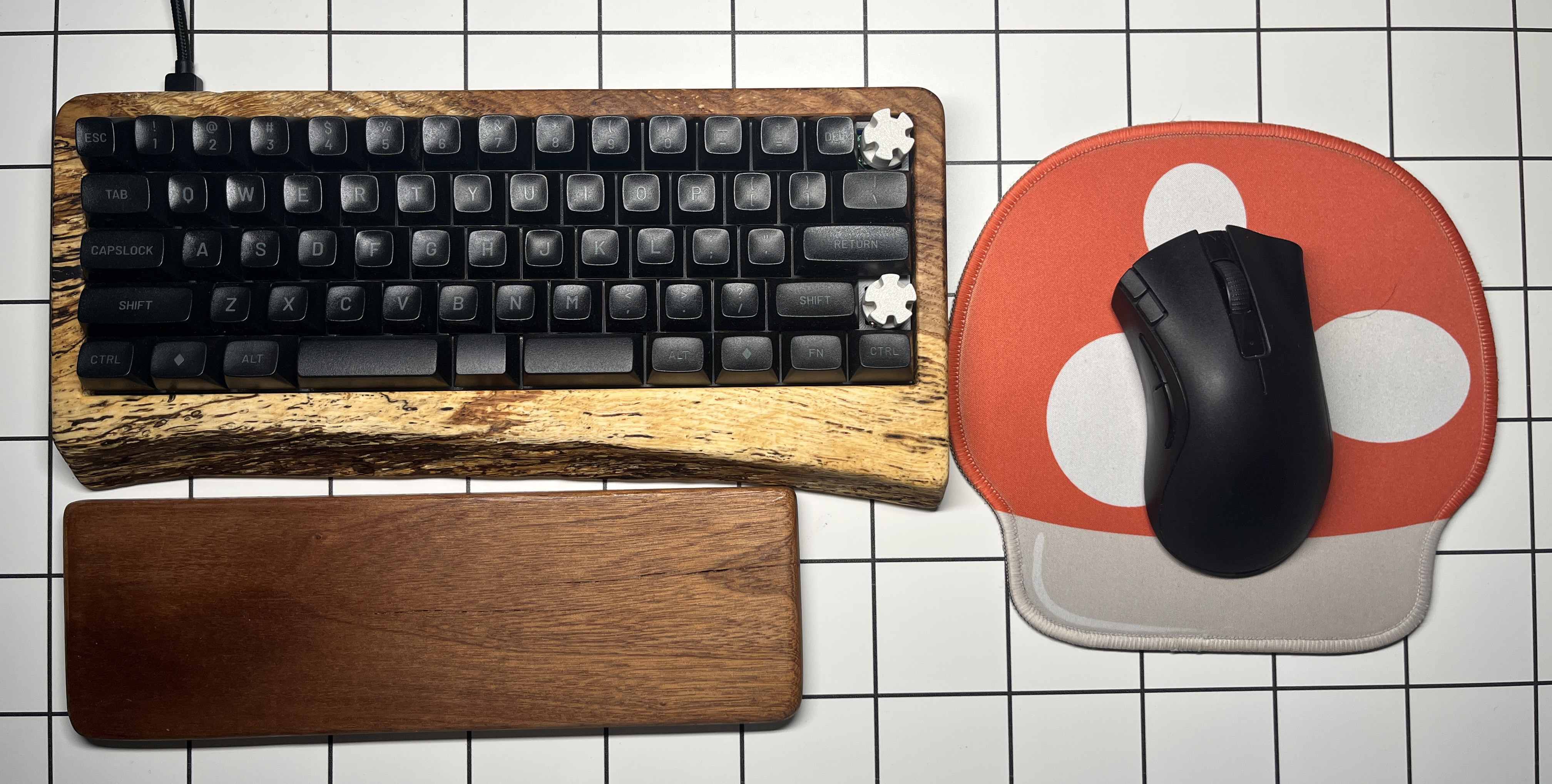
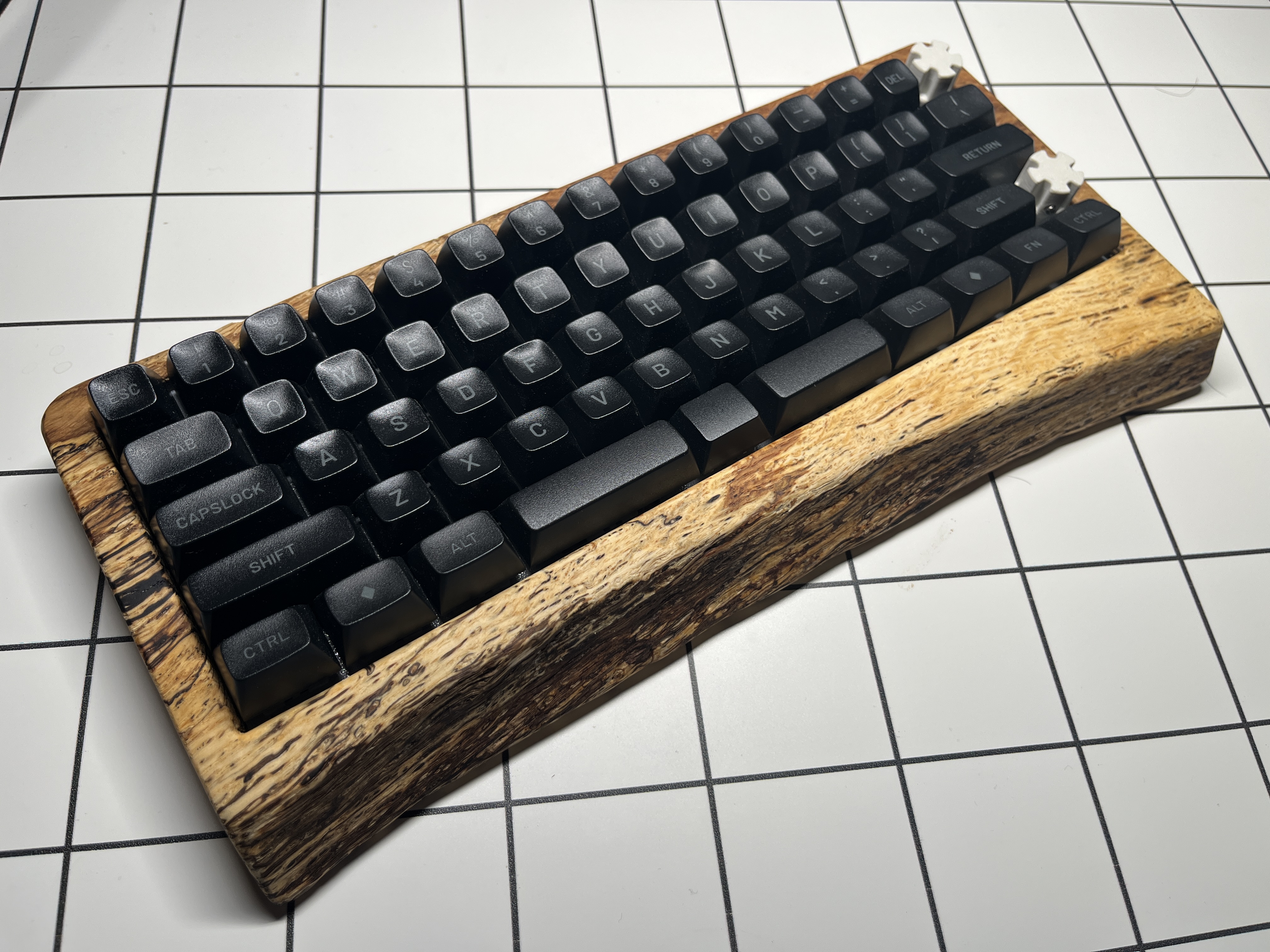
Based on the characteristics of the wood, my design evolved into a bulkier look to preserve the original material, while also maintaining the structure's stability. The case features an O-ring-mounted mechanism, which has been proven by the keyboard community to be a cost-effective and component-friendly choice.
The material was found in the scrap bin. It has holes and cracks, making it hard to withstand larger projects. I was drawn by the beautiful live edge and decided to turn it into a CNC project. After measuring and inspecting the cracks and holes, I found 60% keyboard components are a good fit for this piece of material.
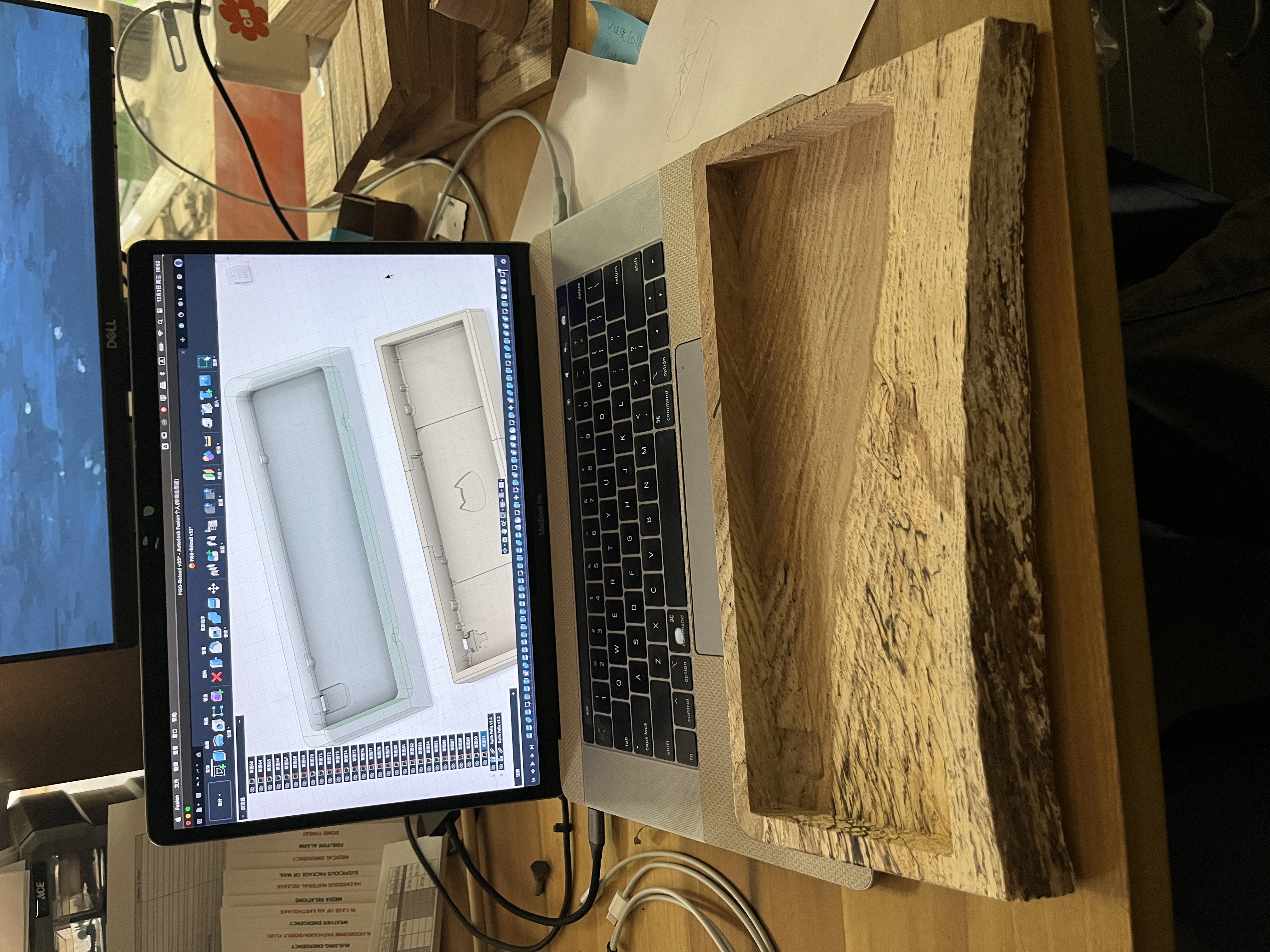
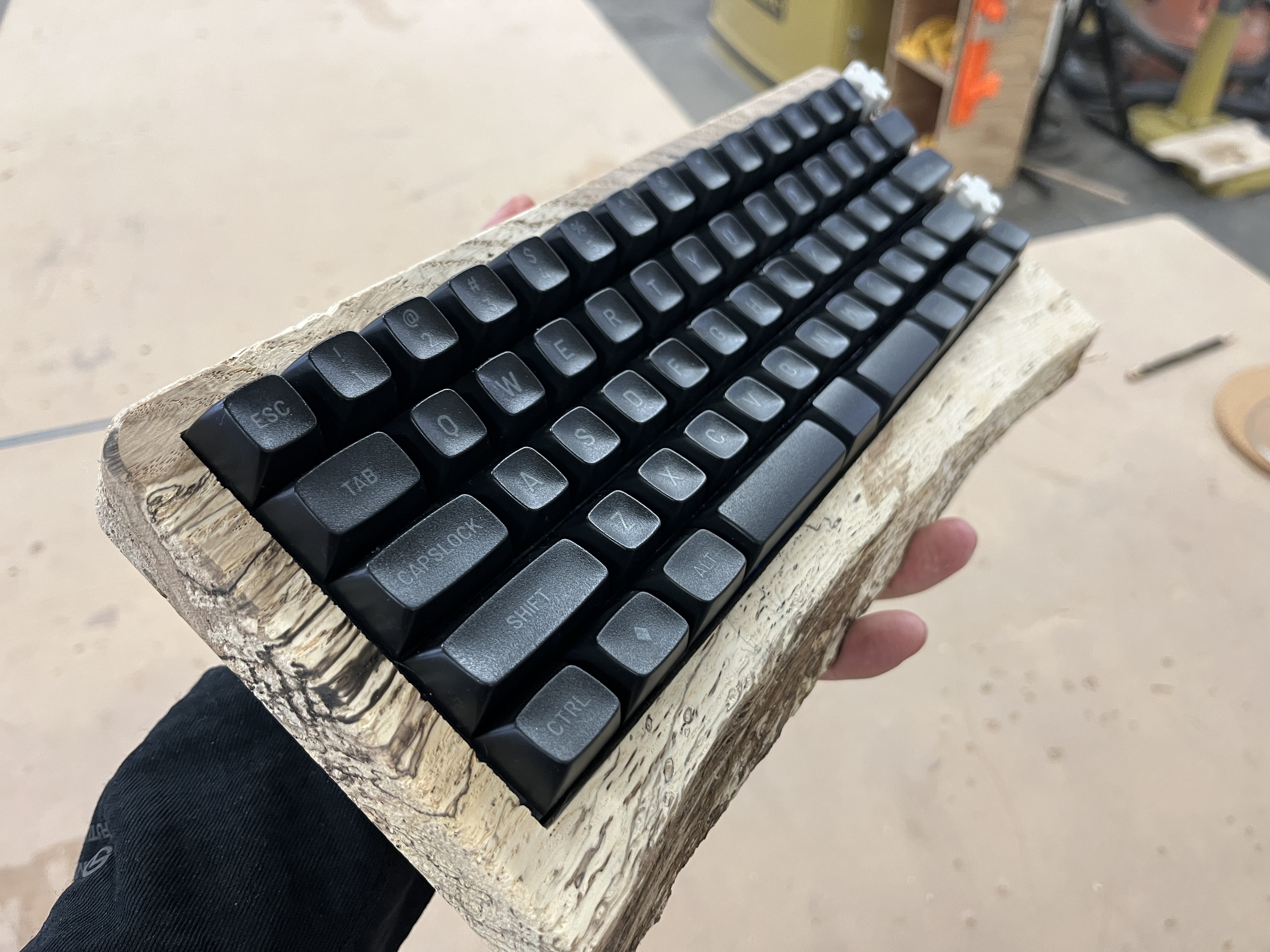
I designed the case with Fusion 360, tested the tolerance with 3D printing, and created the CNC program in Vectric Aspire. Finally, I used the router and orbital sander to create the rounded corner, removed the bark, and carved the USB Port with a chisel. I also designed a 3D printed adapter to hold the USB port, so I do not need to drill holes in the wood that will loosen over time.
The piece was finished with 400-grit sanding and 3 layers of oil.